

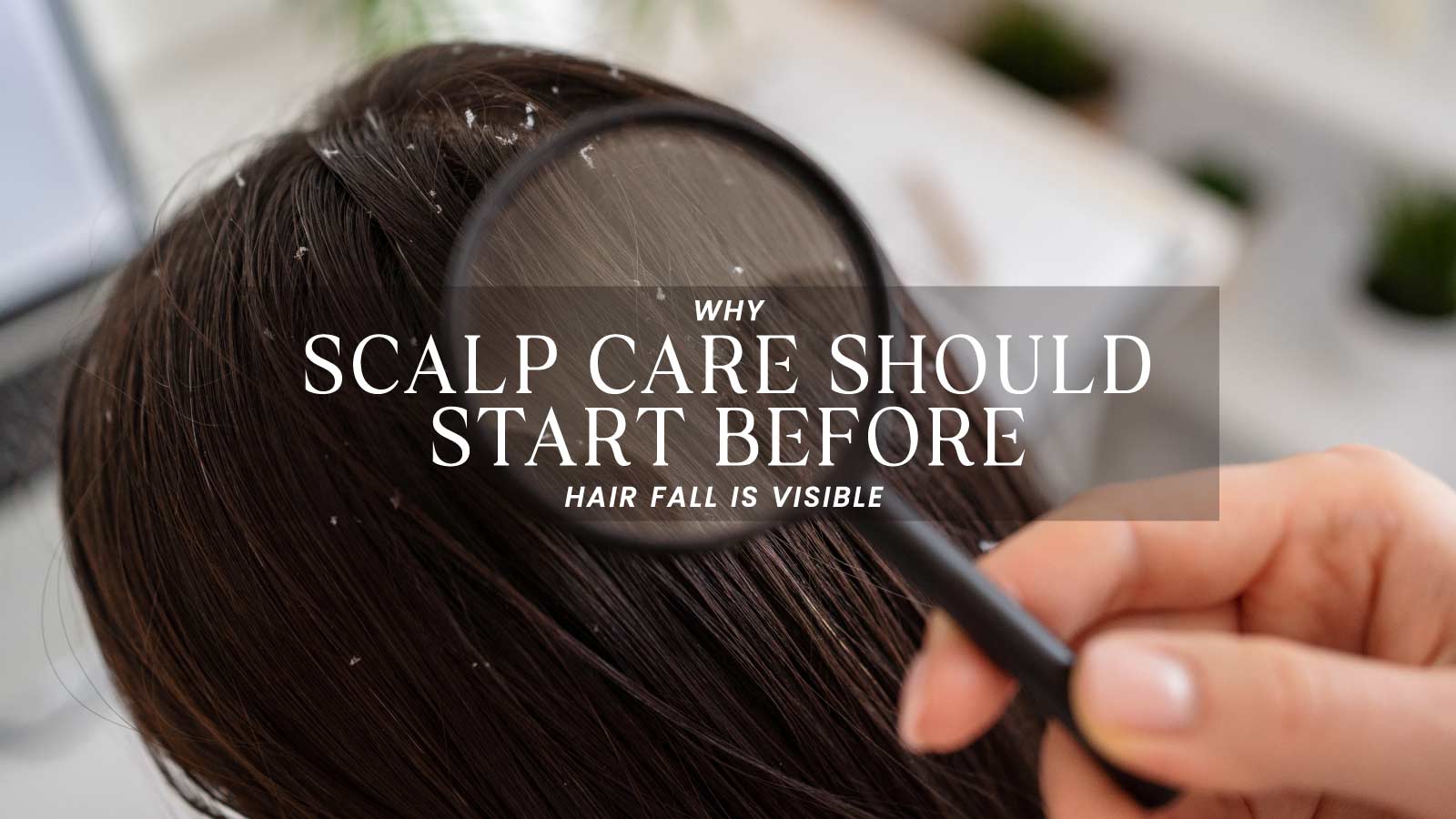
Why Scalp Care Should Start Before Hair Fall Is Visible
Most people begin caring about their scalp only after they see hair fall on the pillow, in the shower drain, or while combing. By then, the problem has already been developing for months. Hair fall rarely starts suddenly — it’s usually the final sign of ongoing scalp stress. That’s why waiting for visible hair fall often means you’re already late.
Healthy hair growth depends on a healthy scalp environment. When scalp care starts early, it helps prevent problems rather than trying to fix them after damage has occurred.
Hair Fall Is a Delayed Signal, Not the First Warning
Hair follicles go through natural growth cycles. When the scalp is under stress — due to buildup, inflammation, poor circulation, or imbalance — follicles weaken quietly. The hair continues to grow for some time, but the root strength slowly declines.
Visible hair fall appears only when:
- Follicles can no longer hold the hair securely
- More hairs enter the shedding phase prematurely
- New hair growth becomes weaker or slower
By the time shedding increases, the scalp has already been unhealthy for weeks or months.
Early Scalp Imbalance Often Goes Unnoticed
Before hair fall becomes visible, the scalp usually shows subtle signs that are easy to ignore:
- Excess oil or dryness
- Occasional itching or tightness
- Mild flaking
- Reduced hair volume or density
- Hair that feels weaker at the roots
These signs indicate that the scalp environment is changing — and hair follicles are under stress.
Why Waiting for Hair Fall Makes Recovery Slower
Once hair fall is visible, follicles need time to recover before they can produce stronger hair again. This makes regrowth slower and requires more intensive care.
Starting scalp care early:
- Preserves follicle strength
- Maintains a healthy growth cycle
- Reduces the risk of excessive shedding
- Supports thicker, healthier hair over time
Prevention is always easier than correction.
The Role of Scalp Health in Long-Term Hair Density
Your scalp is skin — living, responsive, and sensitive to stress. Pollution, product buildup, hormonal changes, lifestyle habits, and harsh haircare practices all impact scalp health.
When the scalp is balanced:
- Hair follicles remain active
- Blood circulation supports growth
- Hair grows stronger and stays longer
Ignoring scalp care allows small issues to accumulate into visible hair loss.
What Early Scalp Care Should Focus On
Effective scalp care before hair fall appears is simple and consistent:
- Gentle cleansing to prevent buildup
- Maintaining scalp hydration and balance
- Avoiding harsh or residue-heavy products
- Supporting circulation with mindful care habits
- Reducing inflammation and irritation early
These habits create an environment where hair can thrive.
A Preventive Approach to Hair Care
At Phimedy, haircare focuses on prevention, not just correction. Supporting scalp health early helps maintain strong roots, stable growth cycles, and long-term hair density — long before hair fall becomes a concern.
This approach shifts haircare from reactive treatment to proactive maintenance.
Conclusion: Don’t Wait for Hair Fall to Start Caring for Your Scalp
Hair fall is not the beginning of the problem — it’s the result. Scalp care should begin long before shedding becomes noticeable. By paying attention to early scalp signals and maintaining balance, you protect hair follicles, support healthy growth, and reduce future hair fall risks.
Strong hair doesn’t start when hair falls.
It starts when the scalp is cared for early.
Frequently Asked Questions
- Can scalp care prevent hair fall completely?
It can significantly reduce the risk and severity by maintaining healthy follicles. - How early should scalp care begin?
Ideally, as part of your regular hair routine — even before any visible issues. - Is scalp care only for people with hair fall?
No. It’s essential for maintaining hair strength and density long-term. - How long does preventive scalp care take to show benefits?
Improved scalp comfort is often felt quickly; long-term hair benefits appear over time.




Leave a comment
This site is protected by hCaptcha and the hCaptcha Privacy Policy and Terms of Service apply.